
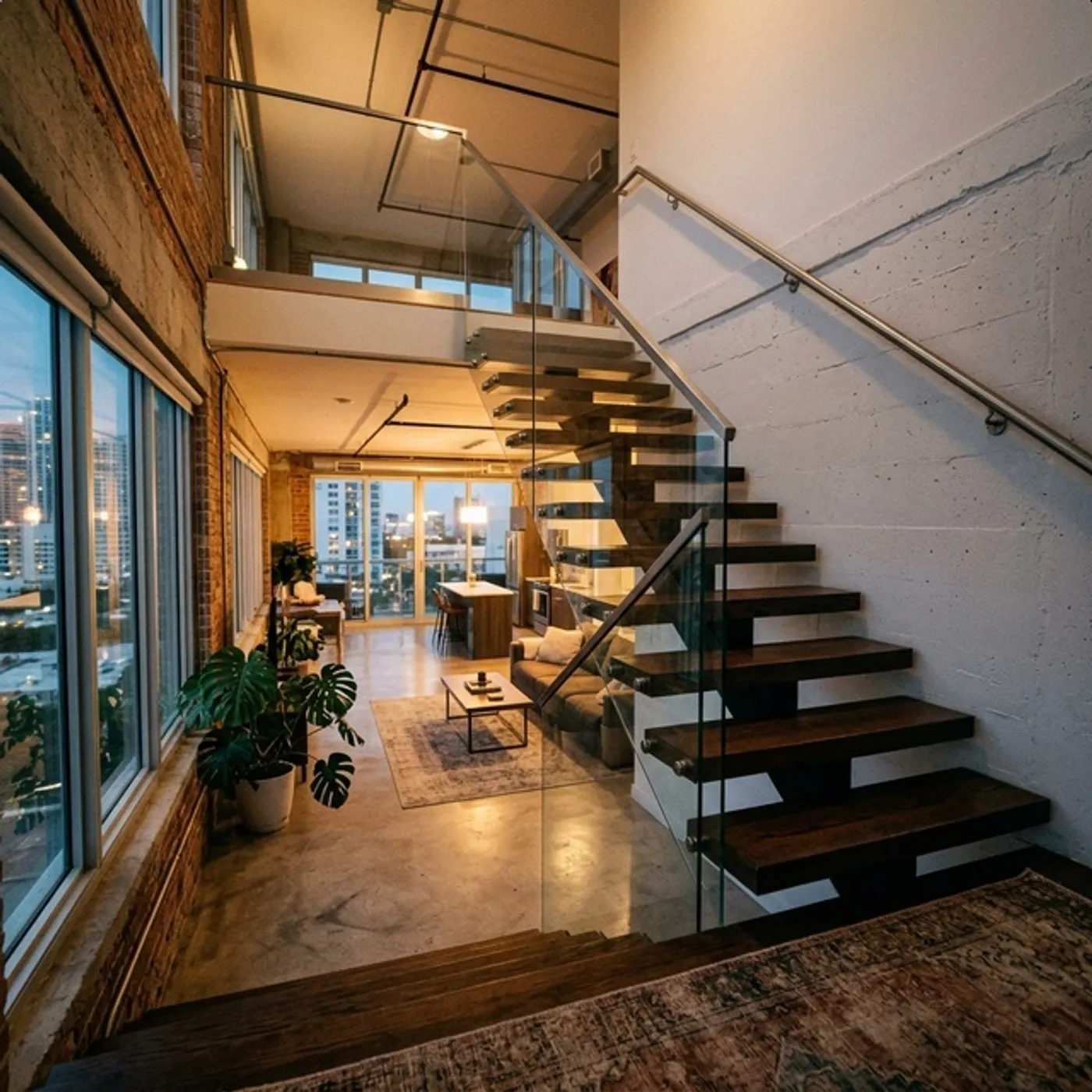
Loft Conversion Floating Stair Retrofit in Toronto, ON
Floating stair retrofits for Toronto lofts, mezzanines, and converted spaces where access, footprint, and structure need careful planning from the start.
Toronto Floating Stairs specializes in floating stair retrofits for Toronto loft conversions, mezzanine additions, and existing properties where a standard stair footprint isn't available or appropriate.
Loft conversion stairs in Toronto present a specific set of problems that new-build floating stairs don't. The floor opening is often already cut — and cut to the wrong size for the stair geometry you actually want. The mezzanine structure is often underbuilt for the loads a floating stair introduces. The wall available for bracket anchorage may be a demising wall, a masonry party wall, or a concrete shear wall — each requiring a different approach.
We start with the structural reality of the existing space rather than with the stair you want. Once we understand what the existing structure can support, we design the stair system around those constraints. Sometimes that means resizing the floor opening. Sometimes it means supplementing the wall with a hidden steel post to carry stringer loads to the floor rather than the wall bracket. We document whatever it takes in the OBC permit drawings so there are no surprises during inspection.
Tight footprints are common in Toronto loft conversions. When horizontal floor space at the landing is limited, floating stair geometry can be adjusted — steeper rise, narrower tread — to compress the plan footprint while staying within OBC limits. We calculate the allowable range during the site assessment so you know what's achievable before committing to a layout.
We've worked in converted warehouse lofts in the Distillery District, added mezzanine stairs to King West townhouses, and retrofitted Annex Victorian semi-detached homes where the original stair was removed and the space reconfigured. Every project starts from the existing conditions, not from a catalogue.
Retrofit scenarios we handle in Toronto
Mezzanine additions to existing open-plan spaces, loft access where no stair previously existed, replacement of spiral stairs in condos, conversion of attic access ladders to proper floating stairs, and replacement of conventional stringer stairs with cantilevered floating systems in existing stair openings. We also handle cases where the existing wall opening is too narrow for the stair you want and the opening needs to be widened with a structural header.
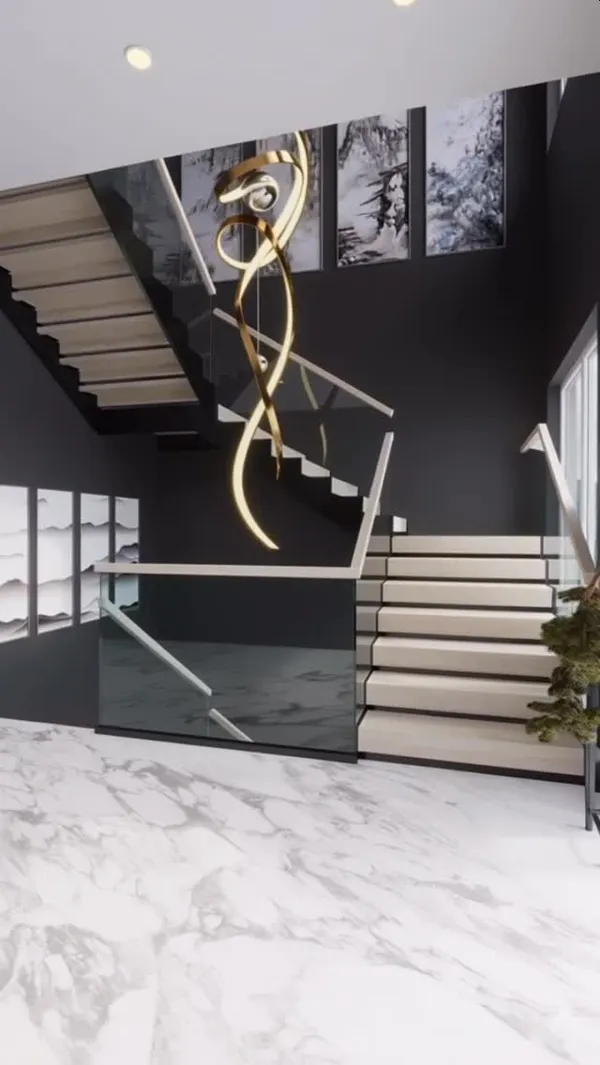
Assess your Toronto retrofit project
We visit the site, assess existing structure, and tell you exactly what's achievable and what the OBC permit will require.
- ✓ Mezzanine stair additions
- ✓ Loft conversion access
- ✓ Tight footprint planning
- ✓ Wall capacity assessment
- ✓ OBC permit documentation
Frequently Asked Questions
Can I add a floating stair to an existing loft space in Toronto? +
My loft wall is concrete block — can you still anchor a floating stair into it? +
The floor opening for my mezzanine stair is already cut — can you work with that? +
Do I need a permit to retrofit a floating stair into an existing Toronto property? +
How long does a loft conversion floating stair retrofit take? +
Ready to retrofit a floating stair into your Toronto loft?
Site assessment. We assess the existing structure before designing anything.